

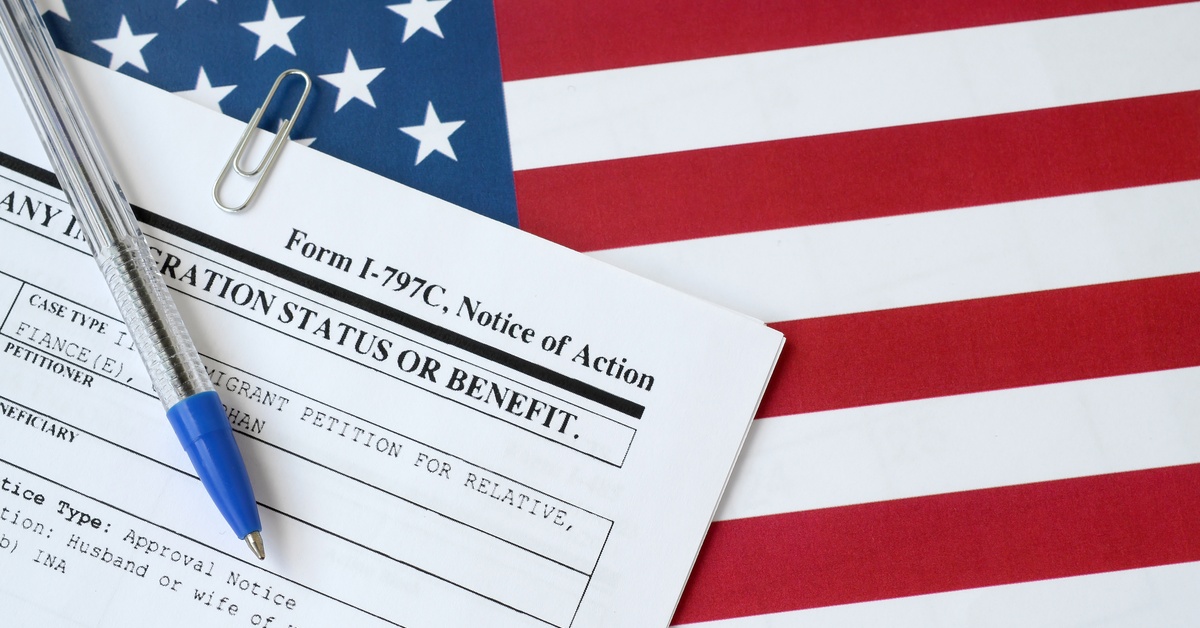
Opening your mailbox to find an official envelope from the U.S. Citizenship and Immigration Services (USCIS) naturally triggers a spike in adrenaline. The document inside is covered in bar codes, government seals, and legal terminology that can feel overwhelming at first glance. You likely have questions about Form I-797C, what they mean, and the next steps for your specific immigration journey.
This document, officially titled a Notice of Action, serves as the primary method of communication between you and the government regarding your immigration case. While the formal appearance might suggest bad news or a demand for immediate action, this is not always the case.
Defining the Notice of Action
The Form I-797C serves as a catch-all for various administrative actions. Unlike an approval notice or a request for evidence, which have their own specific forms, the “C” version covers administrative milestones. USCIS uses this form to communicate receipt of payments, rejection of filings, transfers of files, and fingerprinting appointments.
You should view this document as proof that your application exists within the USCIS system. It confirms that an immigration officer or an automated system has touched your file. This proof becomes vital if you ever need to inquire about your case status or prove to an employer or other agency that you have a pending application.
Breaking Down the Types of I-797C Notices
Because USCIS uses this single form number for multiple purposes, you must read the specific language in the body of the letter to understand its intent. We will examine the four primary reasons you might receive this specific document.
Receipt Notice
A receipt notice is the most common version you will encounter. It arrives shortly after you mail an application or petition to USCIS. This letter confirms that the government received your package and accepted your filing fee.
The most valuable piece of information on this document is your receipt number. This 13-character code, usually starting with three letters like LIN, WAC, EAC, or SRC, allows you to track your case status online.
Rejection Notice
A rejection notice brings less welcome news. USCIS sends this when a filing does not meet the basic requirements for acceptance. Common reasons for rejection include submitting the wrong filing fee, forgetting to sign the forms, or using an outdated form.
When you receive a rejection notice, USCIS typically returns your entire application package along with your payment. This essentially cancels the filing attempt. You must correct the specific error listed in the notice and refile the entire package.
Transfer Notice
A transfer notice indicates that USCIS moved your case from one service center to another. The agency does this to balance workloads and speed up processing times nationwide. If one office becomes overwhelmed with applications, it will shift files to a location with more capacity.
Receiving a transfer notice generally requires no action on your part. It simply keeps you informed about where your file physically resides.
Appointment Notice
An appointment notice carries more weight as it requires your physical presence. USCIS uses Form I-797C to schedule biometric services appointments. During this appointment, the government collects your fingerprints, photograph, and signature to run mandatory background checks.
The notice will list a specific date, time, and location for your appointment at an Application Support Center. Missing this appointment may result in the denial of your application, so you should reschedule immediately if an emergency prevents you from attending.
Distinguishing I-797C from Other Variations
Confusion often arises because USCIS uses similar form numbers for drastically different purposes. Let’s compare the I-797C to its counterparts to help clarify its specific role in the immigration process.
Form I-797A
Form I-797A signifies approval. It typically comes with an attached I-94 record, which serves as evidence of your lawful status and expiration date if you are already in the United States. You would receive this after an approved extension of status or change of employer.
Form I-797B
Form I-797B also indicates approval, but does not include an I-94. This usually applies to beneficiaries living outside the United States who must go through consular processing to obtain a visa. It approves the underlying petition but does not grant entry rights on its own.
Form I-797E
Form I-797E represents a Request for Evidence (RFE). This document halts processing on your case until you provide the missing information or documents. Unlike the administrative nature of the I-797C, an RFE demands a substantive legal response within a strict timeframe.

Limitations on Travel
A frequent misconception involves using the Form I-797C for international travel. You cannot use a receipt or appointment notice to re-enter the United States. This document does not grant you a visa or lawful status; it merely proves you have an application pending.
If you leave the country while a change of status application is pending, USCIS may consider you to have abandoned that application. Always consult with a qualified professional before making travel plans while you have an active case.
Checking for Accuracy
Upon receiving any Notice of Action, you must verify the personal information listed. Check the spelling of your name, your date of birth, and your mailing address. USCIS pulls this data directly from the forms you submitted.
Errors in the notice usually indicate errors in the system. If you find a mistake, you need to contact USCIS to correct it immediately.
Managing Lost Documents
If you lose your Form I-797C, you may need a replacement for your records. USCIS does not simply email copies of these notices. You typically must file Form I-824, Application for Action on an Approved Application or Petition, to request a duplicate.
This process involves a filing fee and processing time. Therefore, you should make digital copies of all notices you receive upon arrival. Securely storing scanned copies prevents the headache of dealing with lost physical documents later in your timeline.
Staying Informed on Immigration Notices
Successfully navigating the U.S. immigration system requires you to understand the language the government uses to speak to you. Understanding what the Form I-797C means and the next steps to take empowers you and avoids preventable errors. The Form I-797C is not just a piece of paper; it is a confirmation of your place in the queue and a directive for your future actions. By reading the details carefully and responding appropriately, you keep your immigration journey moving forward.
Are you searching for a family immigration lawyer in New Orleans? Look no further than Gahagan Law Firm. With a deep commitment to helping families navigate the complexities of immigration law, we’re here to guide you every step of the way. Let us provide the support and expertise you need to achieve your immigration goals. Reach out today to start your journey with counsel you can trust.