

Navigating the path to lawful permanent residency in the United States presents two distinct routes for applicants: adjustment of status and consular processing. While both pathways lead to a Green Card, the journey for each is fundamentally different. A clear grasp of the differences between adjustment of status and consular processing is the first step toward a successful immigration outcome.
Read on, and we’ll provide a detailed comparison to help you understand the critical aspects of both options.
Defining the Two Pathways to a Green Card
Before delving into the specifics of eligibility and procedure, it is important to establish a clear definition for each process. Your physical location at the time of application is the primary factor that determines which path you will take.
What Is an Adjustment of Status?
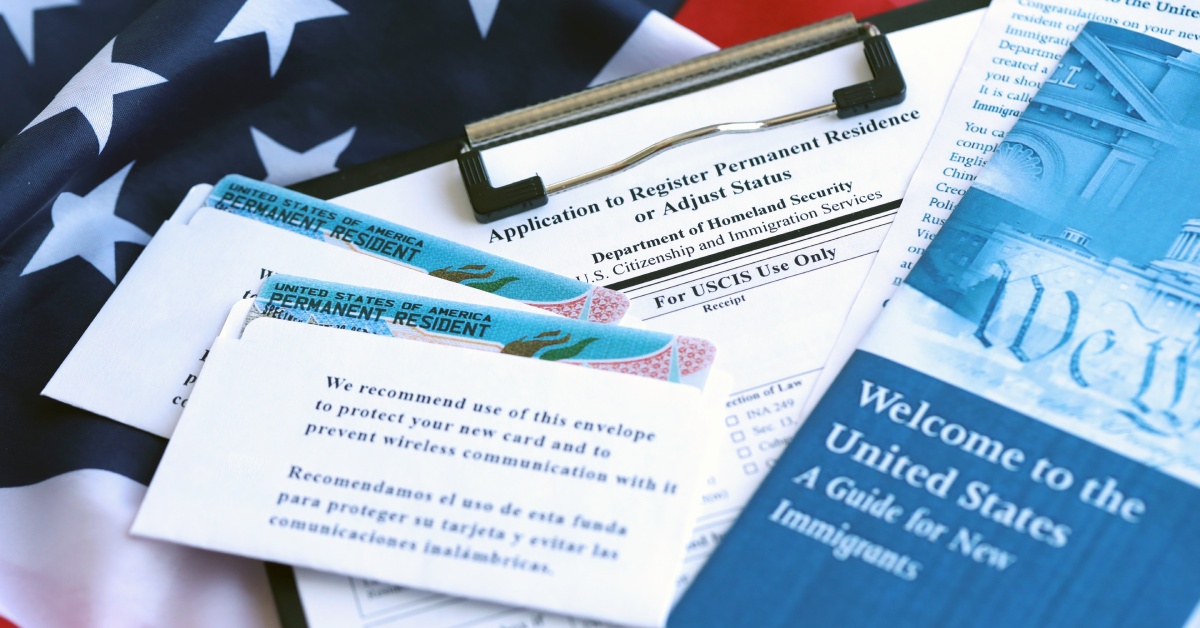
Adjustment of status (AOS) is the process by which eligible individuals who are already physically present in the United States apply for lawful permanent resident status. A successful AOS application results in the applicant receiving a Green Card without having to leave the country.
The AOS process allows an applicant to remain in the US while their application is pending. In many cases, applicants may also be eligible to apply for work authorization and advance parole (permission to travel abroad) while they wait for a final decision on their Green Card application.
What Is Consular Processing?
Consular processing is the pathway for individuals who are outside of the United States or who are in the US but are ineligible for adjustment of status. This process involves applying for an immigrant visa through a US Department of State embassy or consulate in the applicant’s home country.
Once the initial immigrant petition is approved by USCIS, the case is transferred to the National Visa Center (NVC). The NVC processes the required fees and documentation before forwarding the case to the appropriate US consulate abroad. The applicant then attends an interview at the consulate, and if approved, receives an immigrant visa to travel to the United States. Upon entry, they become a lawful permanent resident.
Key Eligibility Requirements
Eligibility for either process is governed by strict legal standards. An applicant must meet all criteria for the chosen pathway to avoid delays or a potential denial.
Eligibility for Adjustment of Status
To be eligible for adjustment of status, an applicant must meet several key requirements. First, they must have been lawfully admitted or paroled into the United States. This typically means entering the country with a valid visa and being inspected by an immigration officer. Second, an immigrant visa must be immediately available to them. This depends on the applicant’s preference category and country of origin.
Furthermore, the applicant must have continuously maintained lawful status since their entry and must not have engaged in unauthorized employment, unless a specific exception applies. For immediate relatives of US citizens (spouses, unmarried children under 21, and parents), some of these requirements, such as visa overstays or unauthorized work, may be forgiven.
Eligibility for Consular Processing
Consular processing is the default method for most individuals seeking a Green Card from outside the United States. The primary requirements are an approved immigrant petition (such as Form I-130, Petition for Alien Relative, or Form I-140, Immigrant Petition for Alien Worker) and an available immigrant visa number.
Applicants undergoing consular processing must also be admissible to the United States. This means they cannot have certain criminal convictions, past immigration violations, or other grounds of inadmissibility that would bar them from entry.
Comparing the Application Process
The procedural steps for adjustment of status and consular processing are distinct, involving different government agencies, forms, and timelines.
The Adjustment of Status Procedure
The AOS process begins with the filing of Form I-485, Application to Register Permanent Residence or Adjust Status, with USCIS. Depending on the case type, this form can often be filed concurrently with the underlying immigrant petition. The applicant must also submit supporting documentation, including birth certificates, proof of lawful entry, and medical examination results.
After filing, the applicant will be scheduled for a biometrics appointment to provide fingerprints and a photograph for background checks. An interview at a local USCIS field office is typically required, where an officer will review the application and verify the information provided. If the application is approved, the Green Card is mailed to the applicant.
The Consular Processing Procedure
For consular processing, once USCIS approves the initial immigrant petition, the case moves to the National Visa Center. The NVC collects the required civil documents from the applicant, such as passports, police certificates, and financial support documents. The applicant also pays the necessary processing fees at this stage.
Once the NVC determines the case is documentarily complete, it is scheduled for an interview at the designated US embassy or consulate. The applicant must complete a medical examination with an authorized physician before the interview. At the interview, a consular officer will make a final decision on the case. If approved, the applicant’s passport is stamped with an immigrant visa, allowing them to travel to the United States.

The Role of Legal Counsel
Navigating the complexities of either adjustment of status or consular processing requires careful attention to detail, and an experienced immigration lawyer can provide critical guidance in both scenarios.
Legal Counsel for Adjustment of Status
For applicants pursuing adjustment of status, an attorney can be invaluable. They can help accurately prepare and file the extensive paperwork, including the I-485 and concurrent applications for work and travel authorization. A lawyer can also represent the applicant at the USCIS interview, ensuring their rights are protected and addressing any complex legal issues that may arise.
Legal Counsel for Consular Processing
During consular processing, legal counsel plays a crucial role in preparing the applicant for the consular interview and ensuring all documentation submitted to the NVC is complete and correct. They can thoroughly prepare the applicant for the questions they will face and advise on how to handle potential challenges. Their expertise is vital in navigating the specific procedures of the designated consulate and addressing any issues that could lead to a denial.
Are you looking for an experienced family-based immigration lawyer to help guide you through the immigration process? Gahagan Law Firm, led by Michael Gahagan, specializes in providing personalized support and expert legal advice to families navigating US immigration laws. With a commitment to reuniting loved ones, Gahagan Law Firm is here to assist you every step of the way. Reach out today to learn how we can help your family’s immigration journey succeed.
Your Path to a Green Card
The decision between adjustment of status vs. consular processing is a critical juncture in the immigration journey. While an adjustment of status offers the convenience of remaining in the United States with the potential for work and travel authorization, it is governed by strict eligibility criteria that not all applicants can meet.
Consular processing, the more traditional route, is available to a broader range of applicants but requires completing the process from abroad without the interim benefits of US employment or travel.